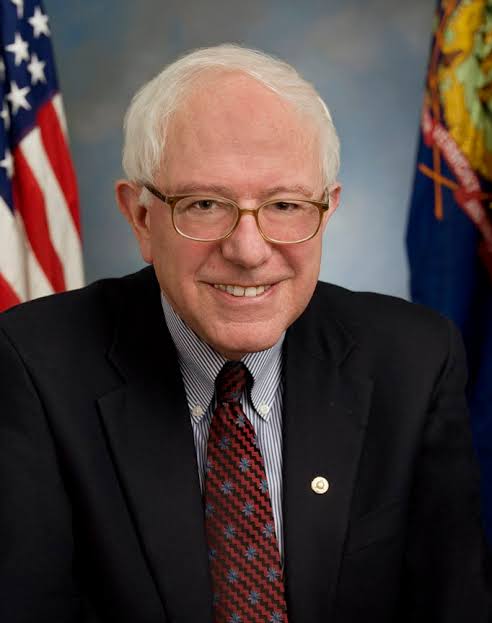
U.S. Senator Bernie Sanders
Bernard "Bernie" Sanders is an American politician and activist serving as the senior United States Senator from Vermont, a seat he has held since 2007. A self-described democratic socialist, Sanders is the longest-serving independent in U.S. congressional history. He is widely recognized as a defining figure of the 21st-century American progressive movement, having fundamentally shifted the national political conversation through his 2016 and 2020 presidential campaigns.
This comprehensive guide covers his life, extensive political career, legislative record, policy positions, and his continued influence on American politics leading up to the 2026 midterm elections.
Who is Bernie Sanders?
Bernie Sanders has spent over four decades in public office. Though he caucuses with the Democratic Party for committee assignments, he has maintained his independent status throughout his career.
| Full Name | Bernard Sanders |
|---|---|
| Date of Birth | September 8, 1941 |
| Birthplace | Brooklyn, New York, U.S. |
| Current Office | U.S. Senator from Vermont (2007–Present) |
| Political Party | Independent (Caucuses with Democrats) |
| Spouse | Jane O'Meara Sanders (m. 1988) |
| Education | B.A. Political Science, University of Chicago (1964) |
Early Life
Sanders was born in the Brooklyn borough of New York City in 1941. His father, Elias Ben Yehuda Sanders, was a Jewish immigrant from Poland whose family was largely wiped out during the Holocaust. His mother, Dorothy Sanders, was born in New York City to Jewish immigrant parents from Poland and Russia.
Growing up in a working-class family in a rent-controlled apartment in Midwood, Brooklyn, Sanders recognized early on how economic struggles impacted family dynamics. This realization became the bedrock of his lifelong focus on income inequality and the shrinking American middle class.
Education
Sanders attended James Madison High School in Brooklyn, where he was a successful track athlete. Following his mother's death shortly after his high school graduation, he spent a year at Brooklyn College before transferring to the University of Chicago.
At the University of Chicago, Sanders became deeply involved in the Civil Rights Movement. He was active in the Young People's Socialist League and the Congress of Racial Equality (CORE), participating in sit-ins against segregated campus housing and attending the 1963 March on Washington for Jobs and Freedom. He graduated with a Bachelor of Arts degree in political science in 1964.
Political Career Timeline
Won the mayoral race in Burlington, Vermont, by just 10 votes, launching his electoral career.
Became the first independent elected to the U.S. House of Representatives in 40 years.
Co-founded the Congressional Progressive Caucus alongside five other House members.
Won Vermont's Class 1 Senate seat, succeeding Independent Jim Jeffords.
Successfully brokered a massive bipartisan bill to reform the Veterans Affairs healthcare system.
Launched his first campaign for the Democratic presidential nomination, shifting the party platform left.
Ran a second formidable primary campaign, raising record-breaking funds from small-dollar donors.
Assumed chairmanship of the Senate Budget Committee, driving domestic spending negotiations.
Took over the Senate Health, Education, Labor, and Pensions Committee to focus on workers' rights and healthcare.
Re-elected to the U.S. Senate in the November 2024 general election, securing his term through 2031.
Mayor of Burlington
After moving to Vermont in 1968, Sanders ran several unsuccessful campaigns for governor and U.S. Senate as a member of the anti-war Liberty Union Party. In 1981, he ran for Mayor of Burlington as an independent, unseating the six-term Democratic incumbent by a razor-thin margin of 10 votes.
He served four terms (1981–1989). During his tenure, Sanders championed affordable housing, revitalized the city's waterfront without handing it over to luxury developers, supported local arts, and implemented community land trusts. Under his leadership, Burlington became known as one of the most livable cities in America, and U.S. News & World Report named him one of America's best mayors in 1987.
U.S. House of Representatives
In 1990, Sanders was elected to represent Vermont's at-large congressional district, defeating Republican incumbent Peter Smith. He served in the House for 16 years (1991–2007).
During his time in the House, Sanders earned the nickname "Amendment King" for his ability to pass more roll call amendments than any other member of Congress. Despite the partisan divide, he consistently formed unlikely coalitions to secure funding for community health centers and veterans. He was a vocal opponent of the USA PATRIOT Act and the 2003 invasion of Iraq.
U.S. Senate
Sanders was elected to the U.S. Senate in 2006, succeeding Jim Jeffords. He was comfortably re-elected in 2012, 2018, and most recently in 2024, extending his current term until January 2031.
Sanders has held significant leadership roles, including:
- Senate Veterans' Affairs Committee: Chair (2013–2015)
- Senate Budget Committee: Chair (2021–2023)
- Senate Health, Education, Labor and Pensions (HELP) Committee: Chair (2023–2025) and currently Ranking Member
His senatorial career has heavily focused on protecting Social Security, Medicare, and Medicaid, addressing climate change, rebuilding infrastructure, and combatting corporate consolidation.
Presidential Campaigns
The 2016 Campaign
Sanders entered the 2016 Democratic primary against Hillary Clinton as a heavy underdog. Relying almost entirely on small-dollar, grassroots donations, he ran a competitive campaign that won 23 primaries and caucuses. While he ultimately endorsed Clinton, his campaign successfully pushed the Democratic Party platform significantly toward progressive goals, mainstreaming policies like a $15 minimum wage and tuition-free public college.
The 2020 Campaign
Entering the 2020 race as a frontrunner, Sanders once again broke fundraising records. He won the popular vote in the first three early primary states (Iowa, New Hampshire, Nevada). However, following the South Carolina primary, moderate candidates consolidated around Joe Biden. Sanders suspended his campaign in April 2020, actively campaigning for Biden to ensure the defeat of Donald Trump.
Political Philosophy
Sanders describes himself as a "democratic socialist". He frequently clarifies that his ideology aligns with the Nordic model of social democracy seen in countries like Denmark, Sweden, and Norway.
His philosophy is rooted in the belief that true freedom requires economic security. He argues against neoliberalism and unregulated capitalism, advocating instead for universal social safety nets, robust labor union protections, cooperative ownership, and the removal of corporate money from politics.
Major Policies
Healthcare
Sanders is the chief architect of the Medicare for All Act, a proposal to transition the United States to a single-payer, government-run healthcare system that would eliminate private health insurance premiums, co-pays, and deductibles. He also staunchly advocates for capping prescription drug prices.
Education
He supports making all public colleges and universities tuition-free and completely canceling all outstanding federal student loan debt, funded by a tax on Wall Street speculation.
Climate
Sanders is a primary supporter of the Green New Deal, a legislative framework aimed at transitioning the U.S. economy to 100% renewable energy while guaranteeing high-paying union jobs in the green energy sector.
Economy
Combating income and wealth inequality is his signature issue. He advocates for breaking up large financial institutions ("too big to fail" banks) and passing comprehensive antitrust legislation.
Labor
Sanders supports the PRO Act (Protecting the Right to Organize), which would remove barriers to unionization. He is a frequent presence on picket lines, advocating for workers' self-management and workplace democracy.
Taxes
He supports highly progressive taxation, including a wealth tax on the top 0.1% of households, raising the corporate tax rate, and closing offshore tax loopholes.
Foreign Policy
Sanders favors reducing U.S. military spending, avoiding endless wars, prioritizing diplomacy, and ensuring labor and environmental standards are central to international trade agreements.
Civil Rights
He has consistently supported LGBTQ+ rights, voting against the Defense of Marriage Act (DOMA) in 1996. He advocates for comprehensive criminal justice reform, the abolition of private prisons, and the demilitarization of local police forces.
Major Accomplishments
- Veterans Affairs Reform (2014): As Chair of the Veterans' Affairs Committee, Sanders co-authored a $16.3 billion bipartisan bill with Republican Senator John McCain to overhaul the VA healthcare system, expanding clinic access and hiring more medical staff.
- Community Health Centers: He successfully negotiated $11 billion in funding for community health centers into the Affordable Care Act (Obamacare), vastly expanding primary care access for low-income Americans.
- COVID-19 Relief: As Budget Chair, Sanders was instrumental in shaping the American Rescue Plan, aggressively fighting for direct stimulus checks and expanded unemployment benefits.
- Childhood Diabetes Reduction (2026): Through the HELP Committee, Sanders recently advanced legislation to require warning labels on ultra-processed foods (UPFs) and prohibit marketing these products to children, aiming to combat childhood obesity and diabetes.
Major Criticisms
Sanders faces criticism from both the political right and the moderate wing of the Democratic Party:
- Fiscal Cost: Critics, including fiscal conservative groups, point out that his sweeping proposals, such as Medicare for All and the Green New Deal, would require trillions of dollars in new government spending and substantial tax increases.
- Feasibility and Compromise: Moderate Democrats often argue that his "political revolution" rhetoric creates unrealistic expectations and that his uncompromising stance makes incremental, achievable progress more difficult.
- "Bernie Bros": During his presidential runs, elements of his aggressive online support base (often termed "Bernie Bros") were criticized for exhibiting toxic behavior toward opposing candidates.
Legislative Record
Sanders is known as a pragmatic legislator who uses his committee power to force votes on systemic issues.
Recent 2025–2026 bills introduced or advanced by Sanders include:
- Childhood Diabetes Reduction Act of 2025: Mandates FDA warning labels on ultra-processed foods.
- Polluters Pay Climate Fund Act: Imposes assessments on fossil fuel emissions.
- FAIR Act: Increases pay rates for statutory pay systems by 4.3 percent.
Voting Record Highlights
- Voted AGAINST the USA PATRIOT Act (2001).
- Voted AGAINST the Iraq War Resolution (2002).
- Voted AGAINST the Defense of Marriage Act (1996).
- Voted FOR the Affordable Care Act (2010).
Books Written
Sanders is a best-selling author. His notable works include:
- Outsider in the House (1997)
- The Speech: A Historic Filibuster on Corporate Greed and the Decline of Our Middle Class (2011)
- Our Revolution: A Future to Believe In (2016)
- Bernie Sanders Guide to Political Revolution (2017)
- Where We Go from Here: Two Years in the Resistance (2018)
- It's OK to Be Angry About Capitalism (2023)
Awards
- U.S. News & World Report's Best Mayors in America (1987)
- Col. Arthur T. Marix Congressional Leadership Award from the Military Officers Association of America (2014)
- Consistently ranked as one of the most popular senators in America among his constituents by Morning Consult polling data.
Public Image
Sanders is known for his unpolished, authentic demeanor. He speaks with a heavy Brooklyn accent, rarely relies on soundbites, and maintains a highly consistent message over decades. In popular culture, he became an internet sensation following the 2021 presidential inauguration, where a photo of him sitting with his arms crossed wearing large, patterned Vermont mittens went viral.
Media Presence
Beyond traditional press, Sanders has leveraged independent media heavily. He was one of the first senators to launch a comprehensive digital presence, hosting town halls on platforms like Twitch and YouTube, and utilizing long-form podcast formats to bypass mainstream media filters.
Net Worth
According to financial disclosure forms and public estimates, Bernie Sanders has an estimated net worth of around $2.5 to $3 million.
Caveat: Members of Congress report their assets in broad ranges, making exact net worth difficult to calculate.
For much of his career, Sanders was one of the least wealthy members of the Senate. His net worth increased significantly after his 2016 presidential campaign, primarily driven by multi-million-dollar royalties and advances from his best-selling books.
Interesting Facts
- Folk Album: In 1987, Sanders recorded a folk album titled We Shall Overcome, featuring him speaking over choir-backed folk songs.
- Sister Cities: As mayor of Burlington, he established a sister city relationship with Yaroslavl in the Soviet Union to ease Cold War tensions.
- Documentary Subject: He was the subject of the 1985 documentary Bernie Sanders: Mayor of Burlington.
Frequently Asked Questions
Is Bernie Sanders a Democrat or a Republican?
He is officially an Independent, though he caucuses with the Democratic Party, served in Democratic leadership roles, and ran for the Democratic presidential nomination in 2016 and 2020.
How long has Bernie Sanders been in office?
He was elected Mayor in 1981, joined the U.S. House in 1991, and has been in the U.S. Senate since 2007. He is the longest-serving independent in U.S. history.
What is the Nordic model that Sanders supports?
It is an economic framework utilized in countries like Denmark and Sweden characterized by a comprehensive welfare state, collective bargaining, and universal healthcare, funded by higher taxes on the wealthy.
When does Bernie Sanders's Senate term end?
Having won re-election in 2024, his current Senate term ends on January 3, 2031.
Current Political Activities
Entering the latter half of the decade, Sanders remains highly active on the national stage. Ahead of the 2026 midterm elections, he is actively campaigning and fundraising for progressive, grassroots congressional candidates nationwide to combat what he terms the "status quo" and the "unbelievable amounts of money" spent by billionaire-backed super PACs.
In his committee work, he continues to tackle public health issues, evidenced by his recent 2026 pushes through the HELP Committee to heavily regulate ultra-processed foods. He remains a vocal opponent of right-wing policies and authoritarianism, organizing rallies to influence the future direction of the Democratic Party.
Legacy
Whether viewed as a visionary reformer or an uncompromising idealist, Bernie Sanders's legacy is secure as the politician who successfully moved the Overton window of American politics to the left in the 21st century. By rejecting corporate PAC money and mobilizing millions of young voters around democratic socialism, he laid the ideological groundwork for a new generation of progressive leaders and fundamentally altered the Democratic Party's platform on healthcare, climate, and labor.